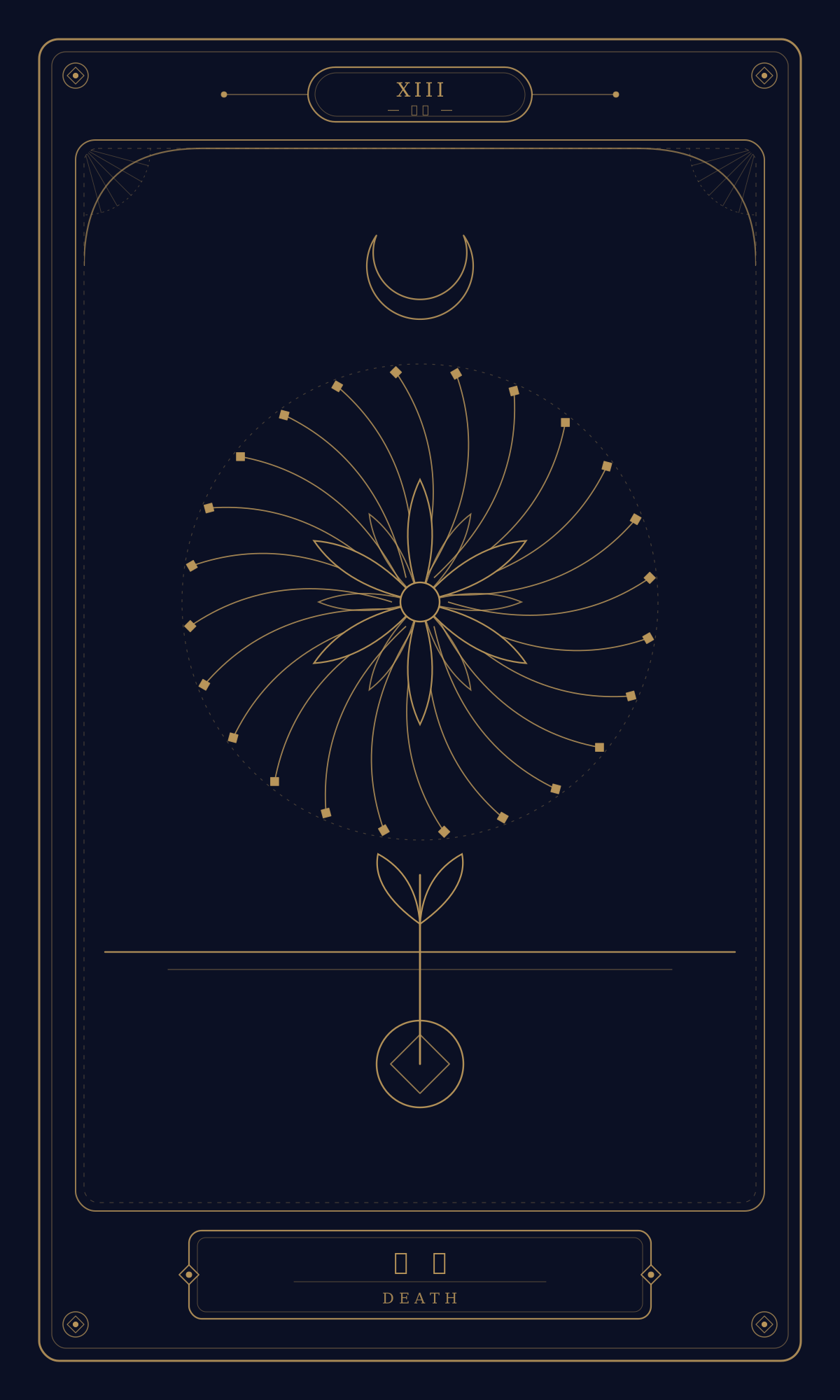
In a word (upright)
A turning point where one thing ends and a new beginning approaches. Despite its scary name, this isn't a bad card. Because something ends, the next door opens. Let go of what you should, and you'll feel surprisingly light as a new flow comes in.
When it appears reversed
You seem to be struggling to let go of what should end. Are you clinging to finished relationships or habits out of fear of change? Drawing a line takes courage, but new beginnings only lie beyond it. Little by little is fine.
A starting point through the image
In the older guidebook's illustration, A mounted figure carries a black flag with a white flower; far away, the Sun shines between two pillars.
Use Boundaries and endings · Transition · Experience to carry forward as a clue when considering something on your mind. A figure in the image need not represent someone of a particular age or gender; it can also symbolize a role held by you or someone around you.
Upright meaning
This is a scene of putting a break on one role or on a form you have kept up. It is not an instruction to let everything go, but a time to choose the parts that no longer fit your life now. If you separate preparing to finish from the experience you want to keep, you may see what you can use next. For the step you stop, you can add a handover to the people involved and a day for a final check.
This position brings one task to a close and considers the experience you can retain. Before looking for what is missing, name the part you have already completed.
Reversed meaning
A wish for closure may coexist with returning to familiar forms. Rather than rushing a major decision, choose one step you can pause now. If past effort alone justifies keeping it, write future requirements separately and review continuation conditions.
Choose one step continuing despite an intended change and arrange conditions to pause it for the next round only.
Love and relating to your partner
This is a time to look at the one thing you want to change in how you carry on, without deciding to end the relationship itself. You can name contact habits that no longer fit or roles that lean toward one side, and talk between the two of you about the time you want to keep from here.
Consider the matter on your mind through Your own wishes and the promises you share. List separately what the person has actually said and the wishes you have not yet checked; this can help you choose a starting point for the next conversation.
In work and learning
Organize roles and procedures and make ending steps concrete. Before advancing, separate material to keep from responsibilities to pass on. Retain parts of earlier methods that still have a necessary purpose.
For a current task, the perspective is to clarify The role you accept and conditions you want to retain to continue. Focus on one step you are responsible for and first agree who needs to decide what.
When this card appears in a three-card spread
In the position for support and conditions to clarify, This position checks whether extra responsibilities or conditions have been added to something you decided to finish. Agree in words on what completion means this time.
In the position for a next step you choose yourself, This position chooses a step to finish before moving on. Decide which materials to keep and whom to pass them to, so you do not take up the same task again.
For a reversed card, use its reversed meaning and action above, then revisit the conditions to check in the same position. Rather than deciding an outcome from the card's name, consider the adjacent cards and the question selected beforehand together.
One thing to take into daily life
Choose one habit to end and write retained experience separately from work you will no longer accept.