In a word (upright)
A good balance makes things go well now. Instead of going to extremes, skillfully blending different things creates a calm, pleasant flow. In relationships too, meeting each other a little at a time works well. It's also a time when mind and body easily come into balance.
When it appears reversed
Has your life fallen out of balance, putting strain somewhere? Too much work, too much play, too much endurance—leaning too far any way tires mind and body. Review your schedule, money and time now, and regain a pace that's just right for you.
A starting point through the image
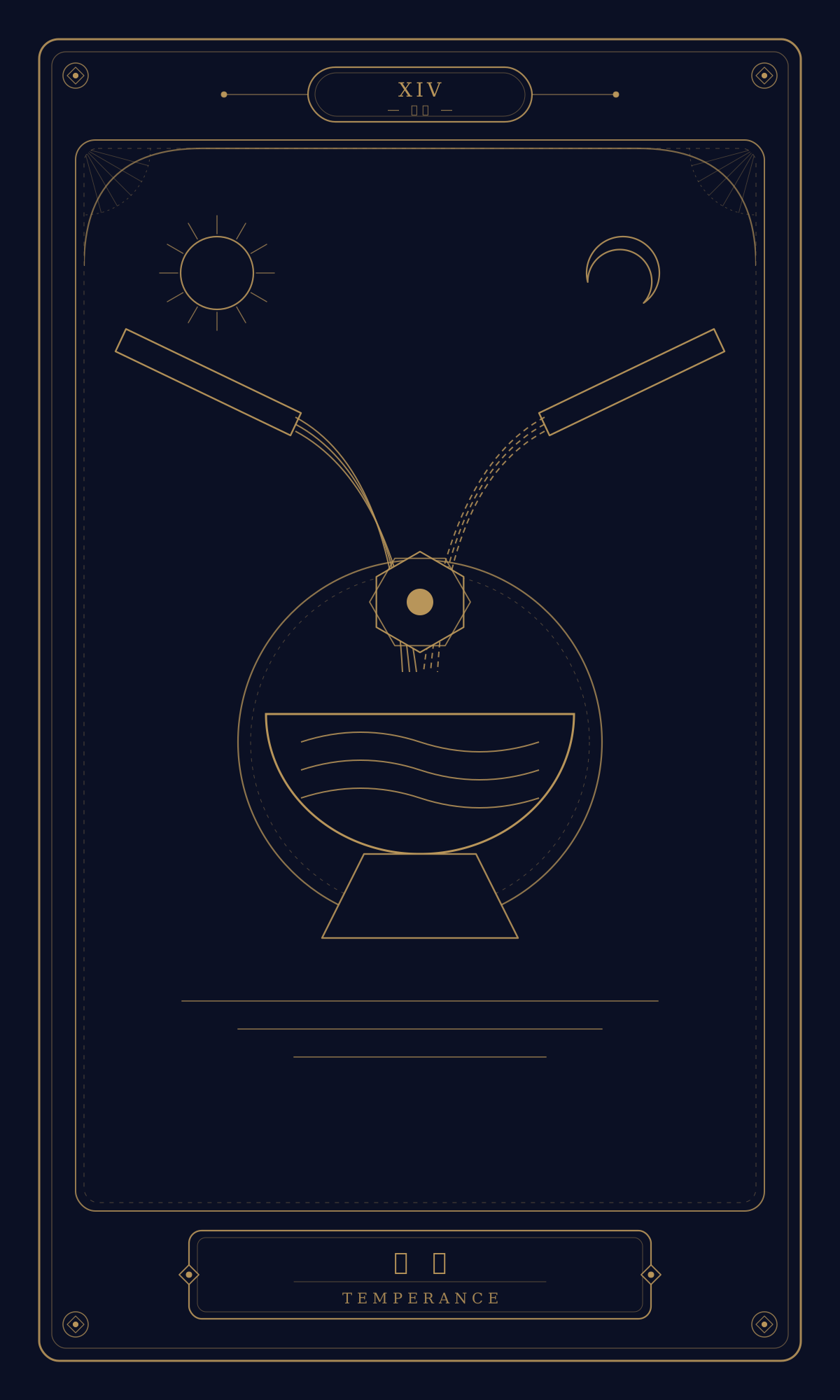
In the older guidebook's illustration, A winged figure pours water between two cups, with one foot in water and one on land.
Use Harmony · Moderation · Restoration as a clue when considering something on your mind. A figure in the image need not represent someone of a particular age or gender; it can also symbolize a role held by you or someone around you.
Upright meaning
Gradually align different conditions and find a sustainable balance. Instead of fulfilling both wishes unchanged, try different amounts or order. The first decision need not be perfectly balanced; adjust through experience. Next week, compare adding one new plan with reducing one existing task.
This position focuses on asking again about one condition you took for granted. Before rushing to decide whether it is right, return to the basis on which you judged it.
Reversed meaning
This is a time to look at whether there is a difference in purpose or in the amount between the things you want to match up. Before you give way more often, you can check what needs to line up for you to move forward together. You can also split off the steps that are easier done separately and leave only the one thing you decide jointly.
For something where adapting has tired you, separate independent steps from shared decisions.
Love and relating to your partner
This is a time to adjust how often you meet and keep in touch to a form the two of you can sustain. Rather than matching the same amount, you can also talk about how to ask for things on busy days. Try the next plan short, then choose the length again after spending the time together.
Consider the matter on your mind through Your own wishes and the promises you share. List separately what the person has actually said and the wishes you have not yet checked; this can help you choose a starting point for the next conversation.
In work and learning
Connect different roles and adjust handover volume. Change one point at a time rather than everything together. In a request, include the material's scope and the form wanted in return.
For a current task, the perspective is to clarify The role you accept and conditions you want to retain to continue. Focus on one step you are responsible for and first agree who needs to decide what.
When this card appears in a three-card spread
In the position for support and conditions to clarify, This position asks whether the list of things to check has grown too broad. Choosing the one point needed for your current question can narrow the person or material to consult next.
In the position for a next step you choose yourself, For your next step, place one question before the decision. Record what you learned in a line, then compare the available conditions again.
For a reversed card, use its reversed meaning and action above, then revisit the conditions to check in the same position. Rather than deciding an outcome from the card's name, consider the adjacent cards and the question selected beforehand together.
One thing to take into daily life
Choose two overlapping plans and change only their frequency or order for a one-week trial.